The Curve, the Load, and the Lean
We spend a lot of time around big rigs, and we run Hwy 52 semi towing calls, so we think about rollovers in a practical way. Most of the time, a rollover starts with sideways force that builds faster than the truck can handle, especially once the load starts shifting.
A truck can feel steady right up until the tipping point, because the center of gravity sits higher than most people realize. Speed, curve radius, road surface, and load balance all stack together, and the stack does not give much warning once the trailer begins to lean.
Why the Trailer Can Tip the Tractor
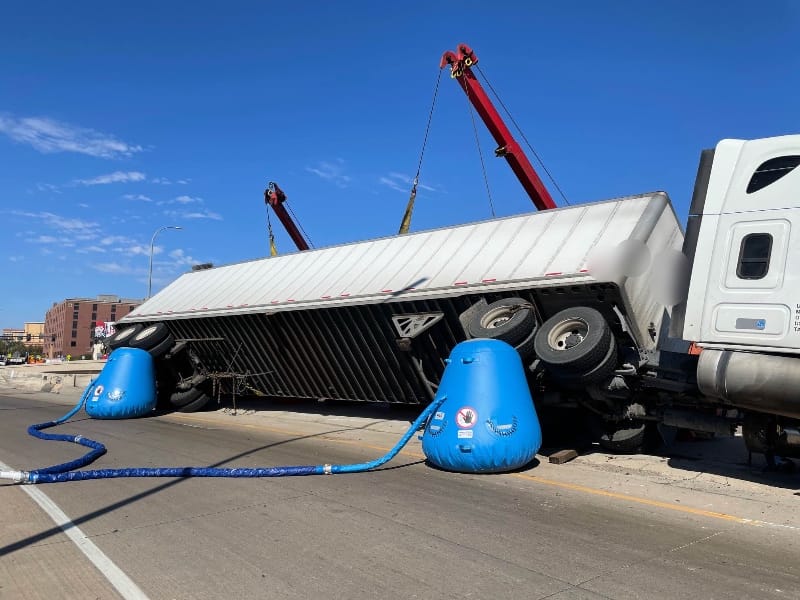
The trailer often acts like a lever, and it can pull the tractor into the roll when the tires lose grip or the load shifts. That pull gets stronger during a quick steering input because the weight swings to the outside of the turn. If the driver tries to “catch” the lean with a second sharp correction, the swing can reverse and get worse. We see this pattern in incident reports and in the way damage shows up on the rig.
Load Shift Makes Small Mistakes Bigger
Cargo that can slide, bounce, or settle changes the truck’s balance while the truck is already under stress. Even a well-secured load can move a little, and a little is enough when the forces build. Liquid loads add their own movement, because the surge continues after the steering wheel straightens. That delayed push surprises drivers who expect the truck to settle right away.
Triggers that Raise the Risk Fast
A rollover rarely comes from a single “bad driver moment.” It usually comes from a chain of normal decisions that line up on the wrong stretch of road, at the wrong speed, with the wrong amount of space around the truck.
We watch for a few repeat triggers that show up across different rigs and routes:
- Entering a ramp or curve a bit too hot for the load on board
- Braking hard while turning instead of slowing before the curve
- Dropping wheels off the pavement edge and jerking back onto the road
- Making a sudden lane change to avoid a late surprise
- Driving tired enough that steering gets choppy and reactive
Ramps and Curves Punish Late Decisions
The curve itself is not the enemy, the timing is. If the speed stays high until the last second, the driver ends up steering and braking at the same time. That combo shifts weight forward and sideways, which reduces grip right when the truck needs grip most. A calmer entry speed gives the suspension time to settle and keeps the load from “piling” to one side.
Overcorrection Turns a Wobble Into a Tip
When the trailer starts to sway, the instinct is to steer more, faster. That can amplify the motion and set up a pendulum swing. We prefer to see drivers slow down smoothly, keep hands steady, and avoid snapping the wheel back and forth. Space around the truck helps here, because it reduces the need for panic moves.
Driver Habits that Cut Rollover Odds
Once we get past the physics, we focus on routines that drivers can actually use on a long day. The goal is to keep the truck boring in curves, boring in merges, and boring in traffic, because boring is stable. If a driver knows the route has tight turns or uneven shoulders, planning a safer speed early beats reacting late, especially along our Hwy 52 semi towing corridors where traffic patterns change quickly.
- Slow down earlier than you think you need to
- Leave space so you can stay smooth
- Check the load like it will try to surprise you
Twin Cities Transport and Hwy 52 Semi Towing: What We Do After a Rollover
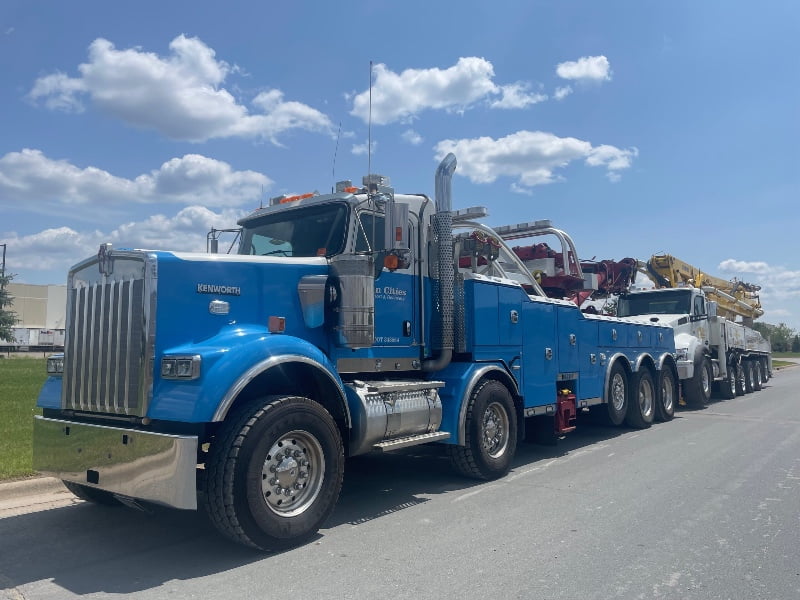
At Twin Cities Transport, we handle heavy-duty towing and recovery, including tractor-trailer incidents, Hwy 52 semi towing, winching, and transport support around the corridor. If you need Hwy 52 semi towing after a rollover or a slide-off, we show up ready to size up the situation and move step by step. Our Hwy 52 semi towing team also provide roadside help for trucks, from tire service to jump starts, so drivers can get rolling again without turning a small problem into a bigger one. We stay practical, we keep it straightforward, and we keep Hwy 52 semi towing focused on getting the roadway cleared and the truck handled the right way.
FAQ
What is the most common cause of a truck rollover?
Most rollovers start with too much speed for the curve, ramp, or evasive move, especially with a high or shifting load. The sideways force builds quickly, and the truck can feel stable until it suddenly is not.
How quickly can a rollover happen once the trailer starts leaning?
It can happen in seconds. A small lean can turn into a full tip fast if the driver adds sharp steering, brakes hard in the turn, or makes a quick second correction.
What are early warning signs that a trailer is close to tipping?
You may feel the trailer “push” the tractor, notice a light or floaty steering feel, or sense a sway that does not settle right away. Any repeated rocking after a lane change or curve is a signal to slow down smoothly and keep the wheel steady.
Which loads increase rollover risk the most?
High center-of-gravity loads, unevenly distributed freight, and liquid cargo that surges can raise risk. Anything that can shift, settle, or slosh changes the truck’s balance right when it needs consistency.
What should a driver do immediately after a rollover?
If you are able, stay calm, assess injuries, and call emergency services. Stay clear of traffic, watch for fuel leaks or downed lines, and do not try to climb on the vehicle or move it without guidance.
When should you call a professional recovery team instead of trying to move the rig?
Call for recovery if the truck is on its side, the trailer is unstable, the load has spilled, or there is damage to steering, brakes, axles, or frame. Trying to drag or “bump” a heavy vehicle upright can worsen damage and create new hazards for drivers nearby.