Parked and Powerless
There’s a particular kind of quiet to a parking garage at the end of a long day. Footsteps echo, fluorescent lights hum overhead. And most drivers assume the only thing standing between them and home is a short walk to their car. Then the key turns and nothing happens. We field plenty of Anoka towing calls from inside parking structures and underground lots. The situations behind them tend to fall into a small set of recognizable patterns.
Dead Batteries and Electrical Failures
Battery failure is the most common reason a vehicle gets stranded in a parking garage. Cold starts, extended parking periods, and aging electrical systems all produce the same outcome. A vehicle that will not turn over when the driver returns. On a surface road, a passing driver or a jump pack from the trunk can resolve a dead battery quickly. In an underground garage, foot traffic is lower and passing vehicles less predictable, which makes the same problem harder to solve without calling for assistance.
Electrical failures beyond the battery create similar situations. A vehicle that loses its starter, its ignition system, or any component that prevents the drivetrain from engaging cannot be moved under its own power. These failures are less common than battery drain, but they produce the same result in a harder environment: a vehicle parked on a deck with no practical way out.
Accidents, Contact Damage, and Parking Lockouts
Accidents inside parking structures range from minor contact during a tight turn to more significant impacts between vehicles on the same ramp. Low-speed contact can disable a vehicle’s steering, jam a wheel against bodywork, or create structural restrictions that prevent the car from rolling freely. A vehicle that appears driveable after a minor collision may not be able to reach the exit under its own power.
Parking enforcement and access control create a separate category of stranding. Vehicles locked inside a structure after closing hours, or blocked by an illegally parked car, may be in perfect mechanical condition but physically unable to exit. Contacting the garage operator is the first step. When the operator cannot resolve the access problem and the vehicle needs to come out, that is the call a towing service handles.
What Makes a Garage Recovery Different from a Roadside Call
When a vehicle is stranded inside a parking structure, the recovery differs from a standard roadside tow in several specific ways:
- Access routes are limited to the openings the structure provides
- Standard tow trucks are too tall to enter most garages; a low-profile unit is required
- Navigation inside a structure requires tight turning radius and low overhead clearance
- Lighting and communication can be limited in underground or enclosed levels
- The recovery may affect multiple levels and requires coordination with the building operator
When an Anoka towing call comes from inside a parking structure, Twin Cities Transport works through those conditions before deciding what to send. The response changes based on the vehicle type, the nature of the failure, and the physical layout of the structure.
Calls from parking garages are not unusual, but they get handled with a different checklist than a standard roadside call. The location adds variables. We account for all of them before the truck rolls.
Twin Cities Transport and the Anoka Towing Calls That Come from Underground
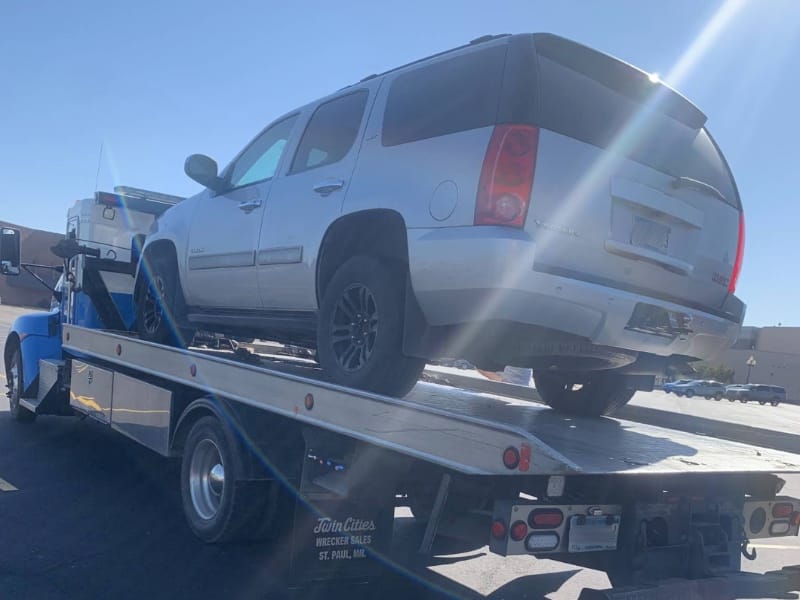
Twin Cities Transport handles Anoka towing from parking structures and underground facilities as a standard part of what we do. When the call comes from inside a garage, we know what questions to ask, what equipment to send, and how to coordinate with the building operator to make every Anoka towing recovery as smooth as the space allows.
Whatever brought the vehicle to a stop, Twin Cities Transport takes the Anoka towing call from inside the structure and builds the response from there. The location adds complexity to the Anoka towing job. That complexity is exactly what our low-clearance recovery process is built to handle.
FAQs
What are the most common reasons a vehicle gets stranded in a parking garage?
Battery failure is the most frequent cause. Other common reasons include starter failure, flat tires, minor accident damage that prevents the vehicle from moving, and being locked in after the structure closes for the night.
Can I jump-start my own vehicle inside a parking garage?
Jump-starting inside a covered garage carries risks including carbon monoxide buildup from an idling vehicle. If the structure is well-ventilated or open-air, a quick jump may be safe. In enclosed underground garages, it is better to call a service that can assess the situation first.
How do I get help if my vehicle is locked inside a parking garage after closing?
Contact the garage operator using the emergency number posted at the entrance, on the ticket machine, or at the gate. If no contact number is available, call the property management company. A towing service can assist with vehicle removal once access is granted.
Can a minor accident inside a parking garage disable a vehicle?
Yes. Low-speed contact in a tight turning lane can jam a wheel against the wheel well, damage the steering rack, or bend a control arm in a way that prevents the vehicle from rolling. Even cosmetic-looking damage can create mechanical restrictions that require a professional recovery.
What if my vehicle is blocked by another car inside the garage?
Contact the garage operator first, as they often have contact information for vehicles with parking passes registered to the structure. If the blocking vehicle cannot be moved and yours is also stuck, a towing service can assist depending on the access configuration.
Are parking garage recoveries covered by roadside assistance plans?
Many roadside assistance plans cover garage recoveries, but coverage depends on the plan and the specific location. Some plans exclude underground or multi-level structures. Check your coverage details or call your provider before assuming a claim will be approved.