Heavy Thinking Before Heavy Moving
A bulldozer does not care that the shortest route is under construction. Neither does a loaded dump truck with a bad axle. Around here, I-35W heavy transport usually comes down to route checks, timing, permits, and knowing where a big load can actually fit. A lot of drivers think heavy hauling is just hooking onto something big and driving slow. Around Minneapolis and the Twin Cities, it usually turns into a logistics job before the wheels even start moving. Weather, bridge heights, traffic timing, axle weights, permit routes. Now let us tell you, all of that stacks up fast.
The Route Usually Decides the Whole Job
One of the first things we look at during an I-35W heavy transport move is the actual route. Not the GPS route. The real route. There’s a difference.
Older industrial areas near Northeast Minneapolis can create problems for oversized loads because of tight turns, low utility lines, and rail crossings. We’ve had jobs where moving a piece of equipment 14 miles took over three hours because we had to avoid a construction zone near downtown and reroute around weight-restricted streets. Sometimes a shorter drive turns into the harder option.
Bridge clearance matters more than people realize too. A load that sits a foot taller than expected can force a completely different path through the city. That usually means extra permits, escort coordination, and more time sitting still while traffic gets controlled.
Timing Changes Everything
Rush hour on I-35W can wreck a transport plan in minutes. We usually try to move oversized equipment early in the morning or later at night when traffic drops off.
Winter changes things even more. Ice buildup alone can affect stopping distance for heavy rigs, especially when moving equipment with uneven weight distribution. We’ve postponed jobs over freezing rain because one bad hill near Burnsville or Bloomington can become a serious issue fast.
Weight Distribution Is a Bigger Deal Than Size
Most people focus on how tall or wide a load is. Weight placement causes just as many headaches during I-35W heavy transport jobs.
A machine that weighs 90,000 pounds but carries the weight evenly can sometimes move easier than a smaller load that’s badly balanced. We spend a lot of time checking axle spacing, trailer setup, and tie-down points before anything leaves the lot. If the load shifts even slightly during transport, it can create steering problems or put too much pressure on one side of the trailer.
We’ve seen operators lose hours because cargo wasn’t secured correctly before arrival. A few common issues:
- Loose chains after temperature drops
- Uneven loading on detachable trailers
- Hydraulic leaks changing weight balance
- Improperly lowered booms or attachments
- Tires underinflated from sitting overnight
Those small details can delay permits or force roadside adjustments before the move even begins.
Communication. More Important Than Horsepower
Heavy transport jobs involve more people than most drivers expect. Dispatchers, escort vehicles, contractors, state permit offices, warehouse crews. Everybody has to stay on the same page.
One missed phone call can leave a crane operator waiting two hours at a jobsite while traffic control expires. We’ve had situations where delivery sites changed at the last minute because another subcontractor blocked access with stored materials. That kind of thing happens constantly around active construction projects in the Twin Cities.
The actual driving part sometimes feels like the easiest piece of the whole process.
How Twin Cities Transport Handles I-35W Heavy Transport
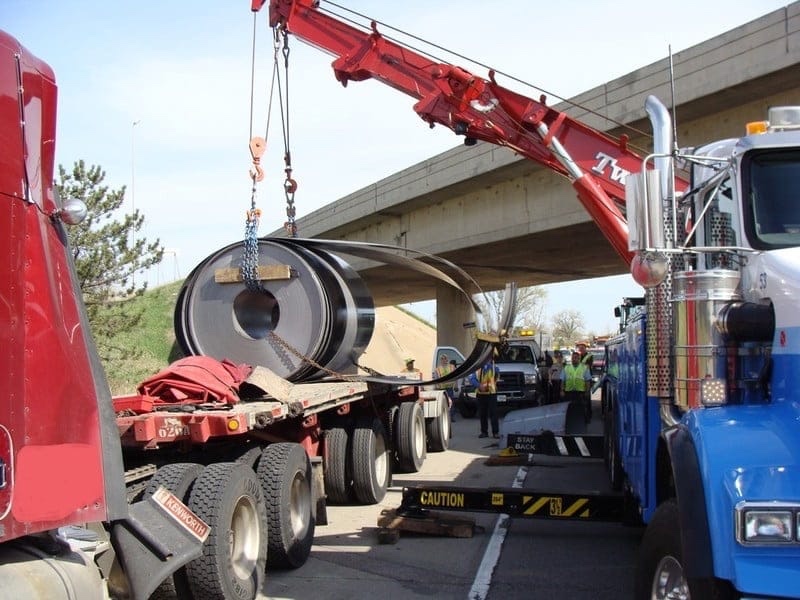
At Twin Cities Transport, most of our I-35W heavy transport calls involve construction equipment, loaded commercial trucks, forklifts, buses, and disabled semis that need relocation around Minneapolis and the surrounding metro area.
Some I-35W heavy transport jobs stay local. Others start near Lakeville or Burnsville and end up heading north toward industrial sites closer to Blaine or Brooklyn Park. Every route changes depending on road work, weather, and load size. During road construction season, especially around I-35W and Highway 62, we usually spend extra time checking detours before moving oversized equipment because lane closures can shift overnight.
The I-35W heavy transport planning side can take longer than most people think. A heavy transport move might spend more time being organized than actually driving down the road. That’s pretty normal around here once snow, traffic, and construction all start piling onto the same freeway.
FAQs
How far ahead should a heavy transport job be planned?
A few days is usually best. Larger or overweight loads may need more time because permits, escorts, and route checks can slow things down.
What information should I have before calling for heavy transport?
Have the equipment weight, height, width, pickup address, delivery address, and any loading details ready. Photos help too, especially if the vehicle or machine is stuck, damaged, or sitting in a tight area.
Can heavy transport be done at night?
Yes, and night moves are often easier because traffic is lighter. Some loads still have permit restrictions, so timing depends on the route and the size of the load.
What can delay a heavy transport job?
Bad weather, low bridges, road work, missing permits, blocked access, and wrong load measurements can all cause delays. Even one tight turn can change the whole plan.
Do heavy loads always need escort vehicles?
No. Escort needs depend on the load’s size, weight, and route rules. Wide or tall loads are more likely to need them.
Can a damaged truck or machine still be transported?
Usually, yes. The transport crew may need extra time to secure loose parts, check leaking fluids, or load it from a different angle.