
One Broken Support Can Hold Up an Entire Shipment
A semi-trailer parked at a loading dock or truck yard relies on its landing gear to support the front end. When those metal legs collapse, a loaded trailer can drop onto the pavement, taking its freight and delivery schedule down with it. For Minneapolis dropped trailer recovery, the challenge is figuring out how to get everything moving again without causing further damage.
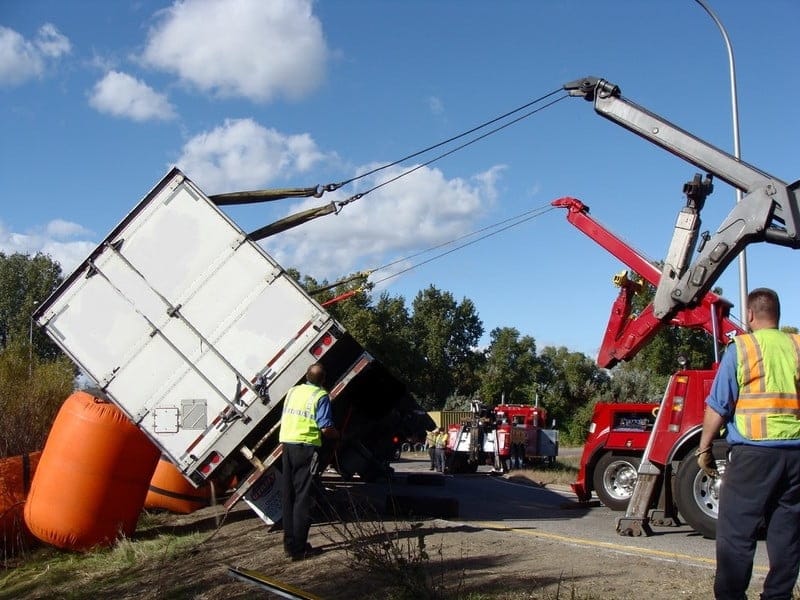
A trailer might drop because its landing gear fails, the ground beneath it gives way, or the tractor pulls away before the fifth wheel is properly connected. Depending on how it falls, the trailer may end up leaning sideways or resting directly on its underside.
For a fleet dispatcher, there’s an immediate practical problem. The next driver may already be assigned, the receiving warehouse is expecting its freight, and nobody knows yet whether the trailer can be used.
Before Anyone Sends Another Tractor
A replacement truck won’t necessarily solve the problem. Dispatch first needs to establish what happened and whether the trailer is stable enough to approach.
Useful information includes:
- Trailer weight: Is it empty, partially loaded, or carrying a full shipment?
- Landing gear condition: Did one support collapse or both?
- Cargo: What is inside, and could it have shifted?
- Location: Is the trailer on pavement, gravel, or soft ground?
- Visible damage: Has the frame or coupling area been affected?
Photographs taken from a safe distance can help recovery operators understand the situation before arriving.
Can Another Truck Simply Back Under the Trailer?
A replacement towing vehicle needs to position its fifth wheel beneath the kingpin at the correct height. If the trailer’s front end is sitting too low, the connection isn’t possible. Trying to force the tractor underneath could shift the load or damage the coupling components. The fallen end must be properly supported and raised before reconnection can be considered.
Getting the Trailer Off the Ground
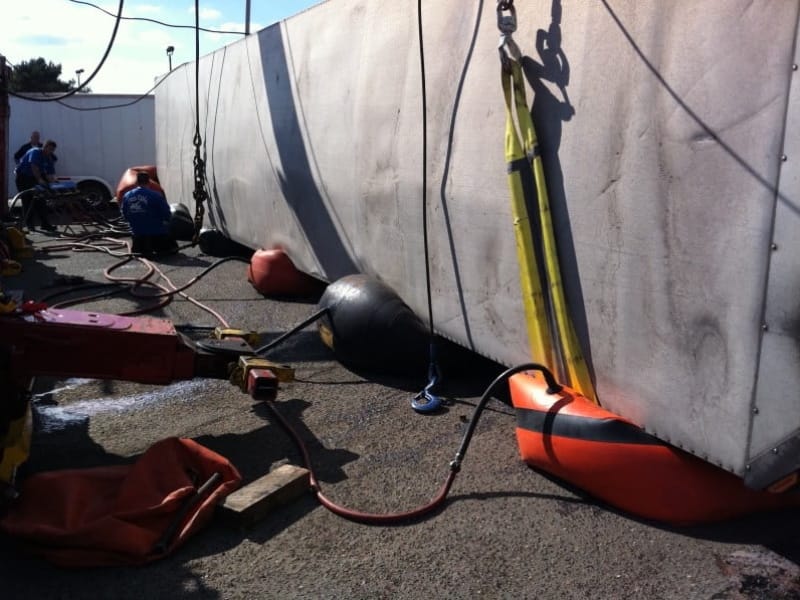
For trailer recovery in Minneapolis, operators first establish where the weight is resting and how it will behave when lifted. The lifting method depends on the trailer’s position, structural condition, and available access.
A heavy-duty wrecker or rotator may be used to raise the front end in stages. During Minneapolis heavy trailer recovery, crews may also use cribbing or other suitable supports to stabilize the trailer as its position changes.
The weight of the cargo remains an important consideration throughout the operation. An uneven load can affect balance, particularly when one side of the trailer has dropped farther than the other.
What Happens to the Freight?
Even after the trailer is upright, a fleet dispatcher may still have decisions to make.
With loaded trailer recovery in Minneapolis, three outcomes are possible:
- Reconnect and continue: If inspections confirm the trailer is roadworthy, a tractor can reconnect and resume transport.
- Repair before departure: Damaged landing gear or other components may require attention.
- Transfer the cargo: If the trailer cannot safely carry its load, the freight may need another trailer.
For dropped trailer recovery around Minneapolis, cargo handling can become a substantial part of the job, especially when the load has shifted or the trailer’s structure has been damaged.
The Lift Is Finished. Is the Trailer Ready?
A trailer standing upright may still have damaged landing gear mounts, a bent frame, or problems around the kingpin. These components need inspection before the trailer returns to regular service.
During semi-trailer recovery in the Twin Cities, coordinating the next step with the fleet operator helps determine whether repairs, load transfers, or additional transportation arrangements are necessary.
Twin Cities Transport & Recovery: Minneapolis Trailer Recovery Delivered by Experts
If you need Minneapolis trailer recovery, call our 24-hour dispatch team. Twin Cities Transport & Recovery has been family-owned since 1967. What began with one tow truck has grown into a fleet of more than 100 vehicles serving Minneapolis, St. Paul, and surrounding communities.
Our services include heavy-duty recovery, rotator work, load shift correction, and cargo transfers. We approach demanding recovery jobs by assessing the situation and determining what equipment and assistance are required.
FAQs
Can a fully loaded semi-trailer be lifted?
Yes, depending on its weight, position, and condition. Some situations may require unloading or transferring cargo first.
How much weight can trailer landing gear support?
Capacity varies by manufacturer and model. Operators should consult the landing gear’s rated capacity and applicable manufacturer instructions.
Can collapsed landing gear be repaired?
Sometimes, although severely bent or damaged assemblies generally require replacement. Mounting points should also be inspected.
Can a rotator lift a dropped trailer?
Yes, when the trailer’s weight, position, and lifting requirements are within the equipment’s capacity.
What happens if the cargo shifts during a trailer drop?
The load may need to be inspected, repositioned, or transferred before transportation can continue.
Does Twin Cities Transport & Recovery provide emergency heavy-duty recovery?
Yes. The company offers heavy-duty towing and recovery services 24 hours a day throughout the Twin Cities area.


